Grammar Rules: Subject-Verb Agreement
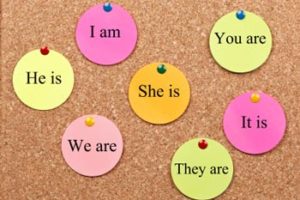
The rule is simple: singular subjects take singular verbs and plural subjects take plural verbs. But sometimes it’s difficult to tell whether a subject is singular or plural. That’s why subject-verb agreement errors crop up in so many pieces of writing. Making matters worse is the fact that most people don’t know what subject-verb agreement…Read More

Keep Writing!
When life gets hectic, getting your creative writing done seems impossible. Inspiration might be knocking, but the house is so full, you’re not sure you can open the door and let it in. How can you keep writing? What if all you need is sixty seconds? We all have responsibilities to fulfill and obligations to…Read More

How to Prepare to Work with Beta Readers
Beta readers are people who read your manuscript before you polish it for publication or submission to a literary agent or publisher. Unlike editors, beta readers are unpaid volunteers who provide feedback that you can use to make improvements to your work. However, before you round up your beta readers, you should have a plan…Read More

Journal Prompts for the Fearless and Fearful
Fears. We all have them, and we all have to face them sooner or later. Some people are plagued with fears that interfere with their ability to live a normal and healthy life. Others dance around their fears, cleverly avoiding those things that give them a nervous twitch. Still more people simply live day to…Read More
Plot Points: A Storytelling Exercise
Today’s fiction writing exercise is an excerpt from Story Drills: Fiction Writing Exercises. This exercise focuses on plot points, which you can use to construct stories and to resolve issues with a story’s plot and structure. Enjoy! Plot Points Plot points are the events that move a story forward—the twists, turns, and developments that push the…Read More

How to Be More Creative in Your Writing
Here’s an age-old question: is creative writing an art or a craft? Artistically minded writers will say that writing is most definitely an art while those who who think more analytically will claim writing is a skill, a trade, and a business. My answer is that writing can be either an art or a craft,…Read More

How to Develop a Beneficial Writing Process
Today I’d like to share a few excerpts from my book 10 Core Practices for Better Writing. These excerpts are from “Chapter Six: Process,” which examines methods, strategies, and other approaches to developing and fine-tuning a writing process that works for you. Understanding The Writing Process “I always worked until I had something done…Read More

Poetry Prompts for Fall
It seems like summer always passes too quickly and winter lasts too long. Maybe that’s why fall is a favorite season for so many people. It seems to hang around just long enough. It’s not too hot, not too cold — a mild, colorful, and comfortable season. Every fall, my creativity goes into overdrive, and…Read More
Sneak Peek at Story Drills: Character Arcs
Today’s post offers a sneak peek at my book, Story Drills: Fiction Writing Exercises. This exercise examines character arcs. Enjoy! Character Arcs In storytelling, an arc is a path of transformation. A character arc is the journey that a character experiences throughout the course of a story, which leads to a significant change. Changes can…Read More

Where Do Successful Authors Get Their Most Brilliant Writing Ideas?
Do writing ideas just fall out of the sky? Is it reasonable to sit around waiting for a great idea to land on your lap, so you can write the next big bestseller? I don’t think so. When it comes to developing worthwhile writing ideas, it’s either feast or famine for most of us. Some…Read More
Subscribe
Subscribe and get The Writer’s Creed graphic e-booklet, plus a weekly digest with the latest articles on writing, as well as special offers and exclusive content.