
Journal Prompts to Tickle Your Funny Bone
Have you ever tried to write comedy? It’s not easy. Comics form the ranks of some of the most talented artists in the world. The gift of laughter is a rich one, and writing funny material can enrich your work. After all, art must reflect life and life is a balance of highs and lows….Read More

Storytelling Exercise: Three Acts
Today’s storytelling exercise is an excerpt from my book, Story Drills, which is filled with fiction-writing exercises that impart basic techniques of storytelling. Today’s exercise is from chapter forty-five. It’s called “Three Acts.” Enjoy! The three-act structure is one of the simplest and most effective ways to outline or analyze a story and its structure….Read More

How to Develop Your Best Novel Writing Ideas
Writing a novel is no small task. In fact, it’s a momentous task. Some writers spend years eking out a first draft, followed by years of revisions. And that’s before they even think about the grueling publishing process. In other words, you’re going to spend a lot of time with your novel. So you better…Read More
Breaking Grammar Rules in Poetry Writing
Accomplished writers respect the rules of grammar the way an acrobat respects the tightrope — grammar might be intimidating and complicated, but we need it in order to perform. Yet sometimes, an acrobat takes her foot off the tightrope. She does a flip or some other trick of physical prowess that seems to defy the…Read More

Homophones: They’re, There, and Their
Homophones are words that sound the same when pronounced out loud but have different meanings. Homophones such as they’re, there, and there confuse kids, slip past spell check, and pop up all over the place as typos and misspellings. To make things worse, many homophones have different spellings, which means spell check ignores them, since alternative spellings…Read More

The Power of Narrative Writing
The secret is out: narrative is powerful. A narrative can entertain, inform, and persuade — but most importantly, it can forge deep, meaningful, and lasting connections. What is Narrative Writing? A narrative is a spoken or written account of events. The word narrative is often used interchangeably with story, because a narrative is structured like a story: it…Read More
The All-Important Relationship Between Grammar and Writing
Today I’d like to share an excerpt from my book 10 Core Practices for Better Writing. This excerpt is from “Chapter Four: Grammar,” which explores the relationship between grammar and writing and includes tips and resources for mastering grammar. Enjoy! Grammar and Writing Grammar, spelling, and punctuation are the most basic components of good writing. Grammatically…Read More

How to Cultivate and Save Your Best Writing Ideas
Doesn’t it seem like the best writing ideas come at the most inconvenient times? It happens when you’re driving, in the shower, or eating dinner at a restaurant. Unfortunately, you’re not sitting in front of your computer, and even if you were, you don’t always have time to stop what you’re doing to make notes…Read More

Top Secret Fiction Writing Prompts
“Ssh, don’t tell anyone. Put it in the vault!” Most of us have had those very words whispered into our ears. In fact, most of us have probably whispered those words into someone else’s ear. They say everyone has a secret. I don’t know if that’s true, but I do know that secrets sure pique…Read More
From 101 Creative Writing Exercises: Your Gang
Today’s writing exercise comes from my book, 101 Creative Writing Exercises, which takes you on an adventure through the world of writing. You’ll explore different forms and genres while learning practical writing techniques. You’ll also get plenty of writing experience and ideas for publishable projects. Each chapter focuses on a different form or writing concept: free…Read More
Subscribe
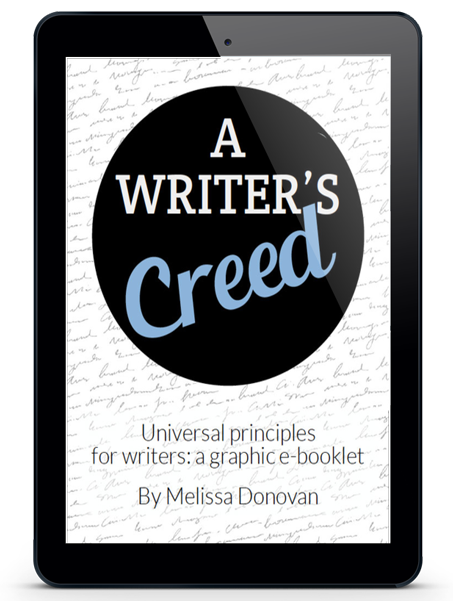
Subscribe and get The Writer’s Creed graphic e-booklet, plus a weekly digest with the latest articles on writing, as well as special offers and exclusive content.