101 Creative Writing Exercises: Now Available on Amazon
Are you ready for an adventure?
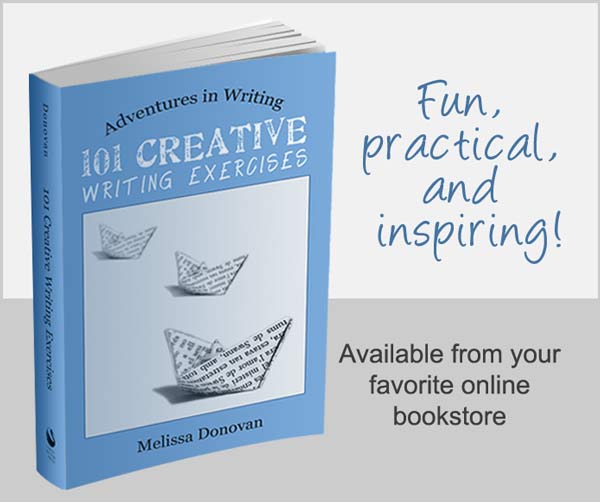
101 Creative Writing Exercises takes you on an exciting journey through the world of creative writing.
You’ll explore different forms and genres by experimenting with fiction, poetry, and creative nonfiction. You’ll discover effective writing tools and techniques. And you’ll create projects that you can submit and publish.
Ideal for new and experienced writers alike, this book will enlighten and inspire you with fresh ideas.
101 Creative Writing Exercises
You’ll learn a lot by simply reading these exercises, which impart writing concepts as well as literary and storytelling devices.
Each chapter focuses on a different form or subject: freewriting, journaling and memoir, fiction and storytelling, form poetry and free verse, article and blog writing, people and characters, and dialogue are all covered.
The exercises in this book are designed to give you plenty of writing practice while inspiring practical ideas for your writing projects. Let the adventure begin!
| Amazon Paperback |
Amazon Kindle |
Censorship Update: Writers Beware!
All over the internet, the same message is being repeated over and over: we will not be censored.
Last month, I published a post explaining how SOPA, PIPA, and other censorship initiatives affect writers. Put simply, censorship is bad for writers. In fact, it’s terrible. Free speech is essential to anyone who writes or creates art.
This month, on January 24, the U.S. Senate will meet to take a closer look at PIPA. There are plenty of senators who have already stated support for the bill, many of whom have received significant campaign funding from the very entities that are pushing bills like SOPA and PIPA. Read more
Writing Forward’s Greatest Hits of 2011
The end of the year is a good time to look back and reflect on the past twelve months. What did we accomplish? What could we have done better? How can we improve next year? And most importantly, what do our readers want?
Back in the early days of Writing Forward, I used to gather up my end-of-the-year stats and let readers know which articles were the most popular. Somewhere along the line, I drifted away from that tradition. I decided to bring it back this year, partially because I myself am curious but also because I think it’s useful to know what interests and engages other writers. Here’s what I learned: Read more
Public Service Announcement: Writers, Censorship, and SOPA
There is nothing that will cause more harm to a writer’s spirit, wreak more havoc on a writer’s heart, or do more damage to a writer’s livelihood than censorship.
Most writers believe they are safe from censorship. Whatever’s being censored usually affects only a small portion of writers and artists. However, once the government has the power to censor, there’s no way to tell what they will censor next. You might look at the current administration and feel they wouldn’t censor your work. But who will be in that administration next year? In 2016? In 2020? Read more
Anne McCaffrey
We all know that our friends and family influence and shape our lives every day. But every so often, someone we’ve never met changes the entire course of our lives.
Anne McCaffrey changed mine.
I was my early twenties when I picked up a copy of one of Anne’s Dragonriders of Pern novels. I took the book home, gulped it down, and discovered three things.
Anne McCaffrey made me realize that I wanted to be a writer. I had been writing for years. But writing was not a dream or ambition for me. It was just something I did — a compulsion rather than a desire. I had always figured I would write a book one day. But after reading my first Pern novel, my relationship with writing shifted. It became something in which I wanted to excel rather than a passive hobby. Read more
Writing Forward Turns Four Years Old!
Earlier this month, Writing Forward turned four years old.
Every year around this time, I reflect on the many wonderful people I’ve met and experiences I’ve had through this blog.
I believe that we writers are extremely lucky to be living in this particular era. The Internet has made it easier than ever for us to build platforms and audiences and to self-publish our work. But what’s most wonderful is that we are easily able to connect with other writers.
Writing Forward has been a vehicle through which I’ve discovered writers and their work, and that is something I never could have predicted four years ago when I launched this blog as part of a business plan.
While I’m proud of this site and all it has enabled me to accomplish, I feel that the anniversary of Writing Forward is really a tribute to its readers, friends, and fans. I want to extend my deepest gratitude to anyone who has visited this site; from loyal subscribers to random passers-by, from quiet lurkers to prolific commenters, all of you have made Writing Forward what it is today. Without you, I never would have reached this exciting milestone.
Thank you, and keep writing!
Forthcoming Book: 101 Creative Writing Exercises
As the approach of Writing Forward’s four-year anniversary loomed, I decided that it was time to write a book for this site. My goal was to put together a useful but fun book that was engaging and designed to help writers explore the possibilities in the world of creative writing.
Well, I was overwhelmed with ideas and instead of coming up with a single book idea, I developed a plan for a series of writing-related books. The series is titled Adventures in Writing and will include books packed with creative writing exercises, prompts, and tips for writers.
The first book is dubbed 101 Creative Writing Exercises, and it’s almost done! I expect to publish it sometime in October. Next week, I’ll post the first excerpt from the book.
Writing Forward around the Web!
In the past few weeks, I’ve had the honor of guest posting on some wonderful blogs:
The Bookshelf Muse: To Plot or Not to Plot (8/15/11)
The Top Ten Blog: The Top Ten Ways to Spice Up Your Writing (7/28/11)
The Creative Penn: The Five Biggest Mistakes Writers Make on Their Websites (7/25/11)
I was also honored to be interviewed by two fine bloggers. You can check out the interviews below:
Laura Stanfill: Interview: Melissa Donovan (9/5/11)
Interview at Journal in a Box: Who Journals? (8/29/11)
Subscribe to Writing Forward on Your Kindle
Now You Can Read Writing Forward on Your Kindle
Writing Forward subscriptions are now available on the Kindle.
These days, there are so many gadgets and devices, it’s hard for web publishers to keep up. But I do want to make the content of this site available to readers in as many ways as possible so that you guys can choose what format works best for you.
Unfortunately, Amazon imposes a fee for Kindle subscriptions. I wish I could offer it through the Kindle at no charge, but as of right now, it costs 99 cents per month for a Kindle subscription.
Support Writing Forward
You can help support Writing Forward by leaving a five-star review on our Amazon Kindle page. This is a quick and easy way to show your support and promote the site to other writers. Leaving a review only takes a couple of minutes if you already have an Amazon account.
Write for Us!
If you’re interested in writing a guest post for Writing Forward please check the submission guidelines.
Keep on writing!
National Poetry Month
April is here, which means that National Poetry Month is officially underway.
Poetry is near and dear to my heart. When I first started writing back in junior high, poetry is what got my pen moving. In high school and college, it’s what kept my pen moving.
I’ll be celebrating and recognizing National Poetry Month throughout April here at Writing Forward and also on my Facebook page and Twitter feed.
According to poets.org:
National Poetry Month was established by the Academy of American Poets as a month-long, national celebration of poetry. The concept was to increase the attention paid – by individuals and the media – to the art of poetry, to living poets, to our poetic heritage, and to poetry books and magazines.
About National Poetry Month
National poetry month has been a tradition every April since 1996. Here are some interesting facts about this month-long, literary celebration:
- National Poetry Month was inspired by the success of both Black History Month (February) and Women’s History Month (March).
- It was started by the Academy of American Poets as a way to promote poetry in the U.S. It’s also recognized in Canada. Britain honors poetry in October.
- Poetry books are often published in April. Teachers use April as an opportunity to focus on poetry in the classroom. Bookstores have special poetry readings this month.
- Even though we focus on poetry throughout April, we should enjoy, celebrate, embrace, promote, read, and write poetry all year long!
To learn more, visit the official National Poetry Month FAQ.
Celebrate Poetry!
There are lots of ways that you can participate in National Poetry Month.
- Print your favorite poem and carry it in your pocket all month. Share it with friends, family, and co-workers.
- Read a book of poetry. You can also use email to share your favorite poems.
- Listen to poetry podcasts: check out Indiefeed Performace Poetry (cutting-edge, slam poetry) or Poem of the Day by Sonibyte (canon and classics). You can subscribe to both via iTunes.
- Write poetry and/or submit your poetry to publications. Make a chapbook.
- Promote poetry on your blog or via social media like Facebook and Twitter (this is what I’ll be doing this month).
- Show your support for poetry by supporting poets. Buy a book of poetry or donate to a poetry-friendly organization.
There are plenty of other ways that you can honor poetry this month. The Academy of American Poets has a list of 30 ways to celebrate – that’s one activity for each day of the month!
National Poetry WRITING Month
I’ve heard some buzz in the last couple of years about a little thing called NaPoWriMo – National Poetry Writing Month. This was inspired by NaNoWriMo (National Novel Writing Month), in which participants write a 50,000 word novel in 30 days during November. For NaPoWriMo, you write a poem a day for 30 days in April. Want to give it a try but not sure how to start? Check out these poetry prompts.
Discuss
How are you going to celebrate National Poetry Month? Who are some of your favorite poets and what are your favorite poems? Do you write poetry? Share and discuss poetry in the comments.
Keep on writing poetry!
2009 Milestones and Top Eight Posts
It’s time to say goodbye to 2009. Around this time every year, people reflect on the past twelve months and contemplate their experiences and accomplishments. And we look ahead to the new year with hopes and plans for a better, brighter future.
On the world stage, it’s been a whirlwind year. Is it just me or does it seem like there was an inordinate amount of bad news in 2009? My hopes for 2010 include more positivity, more good news, and more peace, love, and understanding.
And more reading and writing!
I love change and fresh beginnings. Even though I think New Year’s is an arbitrary occasion (we humans created it), it’s good to mark time, take a step back, examine one’s life and ask Where have I been? Where am I going?
They say that to know where you’re going, you have to know where you’ve been. Before I think about what 2010 has in store for Writing Forward, I’d like to take a look at the milestones of the past year and share with you some of the best articles that were featured here throughout 2009.
Milestones
Milestones are a great way to mark our accomplishments. The best ones come unexpectedly, like when I found out that Writing Forward had been named one of the “101 Best Websites for Writers” by Writer’s Digest.
Another milestone for the site was crossing both its two-year anniversary and the 200-post mark. September marked the beginning of Writing Forward’s third year of publication and sometime in November, the 200th post was published.
Top 8 Posts
Here is a mix of my favorite posts from the past year along with those that have been most popular.
- It turns out the entire writing exercises section has been one of the most visited links on the entire site over the past twelve months.
- 25 Creative Writing Prompts (from October) got lots of visits, beating out most posts from the past year that had been up for much longer.
- In keeping with writing exercises and activities and moving into fiction writing, Getting Into Character was a big hit. I guess people like to play-act while they write fiction!
- For grammar geeks and words nerds, Homophones: Two, Too, and To got into the nitty gritty of how to spell words that sound the same.
- I was happy to see that one of my personal favorites, How to Improve Your Writing with Poetry made this list! I’m a believer in poetry as a way to increase creativity and improve your writing skills.
- 21 Do-It-Yourself Proofreading and Editing Tips made a splash with readers. The post got a lot of comments, and I received several complimentary emails, thanking me for the useful tips the article provided.
- Writers are always looking for more sources of inspiration, so it’s no surprise that 12 Places to Find Awesome Writing Ideas and…
- Where to Get the Best Creative Writing Tips both made the list.
Did I miss any? If there was a post from the past year that you loved, please feel free to leave a comment and share a link. And it doesn’t have to be from Writing Forward. Please leave a link to any of your favorite articles on the web from the past year, as long as they’re writing-related.
Finally, I want to thank everyone who has read, commented, and subscribed to Writing Forward in the past year. You guys have been great and I appreciate your support and readership.
Happy New Year!
I hope you all have a happy, prosperous, and productive 2010. Keep on writing!
From Creative Writing to Creative Marketing: Interview with Wendy Burt-Thomas
Creative writing is hard work. You have to master the technical side of writing (know your grammar), deliver work that resonates with readers, and possess massive amounts of drive, ambition, and sheer determination.
It can take months, even years, to write a book. Then you have to sell it – first to an agent, then to a publisher. Finally, you have to sell it to the world.
Many writers believe that once their labor of love is safely in the hands of a publisher, their work is done and they can to move on and start writing their next masterpiece.
Those writers would be wrong.
When the Creative Writing is Completed…
Once your book is slated for publication, the most challenging phase of your project begins. You suddenly have to become a marketer. You have to take your creative writing skills and somehow turn them into creative marketing skills. And sell those books!
Wendy Burt-Thomas is all too familiar with juggling writing and marketing. She is a full-time freelance writer, editor, and copywriter with more than 1000 published pieces. Her third book, The Writers Digest Guide To Query Letters hit stores in January 2009. Wendy was kind enough to share her wisdom with us.
You’ve been a mentor, coach, or editor for many writers. What do you think is the most common reason that good writers don’t get published?
Wendy: Poor marketing skills. I see so many writers that are either too afraid, too uniformed, or frankly, too lazy, to market their work. They think their job is done when they write “the end” but writing is only half of the process. I make a living as a writer because I spend as much time marketing as I do writing.
What are some of the biggest misconceptions that writers have about getting a book deal?
Wendy: That they’ll be rich overnight, that they don’t need to promote their book once it’s published, that publishing houses will send them on world book tours, that people will recognize them at the airport. Still, you can make great money as an author if you’re prepared to put in the effort. If it wasn’t possible, there wouldn’t be so many full-time writers.
How much book promotion does a writer have to do? Don’t the publishers take care of most of the marketing?
Wendy: Depending on your publisher, you can expect to do 95 to 100 percent of your marketing. Even some of the larger houses now expect you to do most of your own book promotion. They have less money, smaller staffs, and staff members that are doing the jobs of several people due to downsizing. Don’t be surprised if the biggest help you get is an offer to send out books to reviewers; reviewers YOU provide. And they may put a cap on that at 20 or 25 books!
Would you say that the first step in marketing is writing a query letter and sending it to an agent?
Wendy: Actually, I’d say the first step comes out before a query letter. Christina Katz talks about this in her book, Get Known BEFORE The Book Deal. You might be marketing yourself by blogging, posting on Twitter, developing and promoting your website, or creating a newsletter (eg. future fan base!).
Why are query letters so important?
Wendy: Breaking into the publishing world is hard enough right now. Unless you have a serious “in” of some kind, you really need a great query letter to impress an agent or acquisitions editor. Essentially, your query letter is your first impression. If they like your idea (and voice and writing style and background), they’ll either request a proposal, sample chapters, or the entire manuscript. If they don’t like your query letter, you’ve got to pitch it to another agency/publisher. Unlike a manuscript, which can be edited or reworked if an editor thinks it has promise, you only get one shot with your query. Make it count!
I see a lot of authors who spend months (or years) finishing their book, only to rush through the process of crafting a good, solid query letter. What a waste! If agents/editors turn you down based on a bad query letter, you’ve blown your chance of getting them to read your manuscript. It could be the next bestseller, but they’ll never see it. My advice is to put as much effort into your query as you did your book. If it’s not fabulous, don’t send it until it is.
You wrote an entire book about query letters. Can you tell us about it?
Wendy: The book was a great fit for me because I’d been teaching “Breaking Into Freelance Writing” for about eight years. In the workshop, I covered a lot of what is in this book: writing query letters to get articles in magazines, to land an agent, or to get a book deal with a publisher. Since I’m a full-time freelance magazine writer and editor with two previous books, this was incredibly fun to write because it didn’t require tons of research. I was lucky enough to receive lots of great sample query letters from writers and authors that I use as “good” examples in the book. I wrote all the “bad” examples myself because I didn’t dare ask for contributions that I knew I’d be ripping apart!
In addition to the ins and outs of what makes a good query, the book covers things like why (or why not) to get an agent, where to find one and how to choose one; writing a synopsis or proposal; selling different rights to your work; other forms of correspondence; and what editors and agents look for in new writers.
It was really important to me that the book not be a dry, boring reference book, but rather an entertaining read (while still being chock full of information). I was thrilled that Writer’s Digest let me keep all the humor.
There’s an entire chapter in the book about agents. Do you think all new writers should get agents?
Wendy: Probably 99% of new writers should get an agent. There are lots of reasons, but my top three are: 1) Many of the larger publishing houses won’t even look at unagented submissions now; 2) Agents can negotiate better rights and more money on your behalf; 3) Agents know the industry trends, changes, and staff better than you ever could.
What advice do you give writers who hope to be published one day?
Wendy: Take every opportunity that comes your way – especially when you first start. If someone asks you to write a brochure for their company or content for their website, do it! I never lied to a client about my experience, but I did always say, “Sure, I’ll give it a try.” My “big break” came when the publisher of a business newspaper for which I had been writing (freelance) articles asked me to come on board as the editor. I had ZERO experience as an editor but she put things in perspective by saying, “Wendy, your articles come in so clean, we never need to edit them. Anyone who doesn’t need an editor could probably be one.” So I quit my job, became the editor and learned enough in two years to become a full-time freelance editor and writer.
My favorite quote is “Luck is when preparation meets opportunity.” I am a very lucky person because I am always prepared to seize writing opportunities.
To learn more about Wendy or her three books, visit GuideToQueryLetters.com. If you have a writing-related question, you can post it on AskWendy.wordpress.com.
How do you feel about switching hats from creative writing to marketing? Are you prepared to market your work? Discuss in the comments!
Interview Announcement
Wendy Burt-Thomas has just published an interview with your Writing Forward hostess on her site, Ask Wendy. You can read the full interview here.
Please head over there and show Wendy all your writerly love and support by leaving a comment and subscribing to her blog.
Next week, Wendy will appear here on Writing Forward in a full interview in which she shares her knowledge and experience with writing, marketing, and query letters.
Wendy Burt-Thomas is a full-time freelance writer, editor and copywriter with more than 1,000 published pieces. Her third book, The Writers Digest Guide To Query Letters hit stores in January 2009.
One of the Best Websites for Writers
Writer’s Digest is the premiere magazine for writers. And by premiere, I mean that it’s sort of a big deal.
So, when I found out that Writing Forward had been chosen as one of the “101 Best Websites for Writers,” I was perfectly speechless.
When I regained my vocabulary, it was just jumbled. What does one say to something like this?
I’m honored, flattered, and excited. To be mentioned in a publication like Writer’s Digest is no small achievement, and it only makes me want to work even harder to bring you the very best creative writing tips and ideas.

Best Websites for Writers
Every year, Writer’s Digest accepts suggestions for websites to be included on this prestigious list. This year, over 2700 entries were received and then narrowed down to just 101 of the very best.
The list is organized by category: challenges/creativity, general resources, agent blogs, publishing resources, jobs and markets, writing communities, genres/niches, and fun for writers.
Writing Forward is listed under “Writing Communities,” which sweetens the honor, since the writing community is what drives this blog and keeps me going week after week.
If you’re looking for some great websites for writers, then you’ll find plenty of treasures on this list. And if you’re any kind of writer, you’ll find Writer’s Digest packed with valuable and useful information from creative writing tips to insight on getting an agent and ultimately getting published.
Welcome, Writer’s Digest Readers!
It’s truly a privilege to welcome the readers of Writer’s Digest to this humble little creative writing blog. I hope you will find the articles here beneficial to your writing endeavors, and I encourage you to participate by sharing your thoughts in the comments or by contacting me directly. Feedback and suggestions are always welcome!
Get on Board
What? Don’t tell me you’re not subscribed to Writer’s Digest!
For less than $20, you’ll get eight issues packed with insightful writing tips, advice for finding an agent, getting published, and even working as a freelance writer. This magazine covers everything from the writing process to marketing your work.
Some of the best-loved and most respected authors in the world have been featured in Writer’s Digest. Plus, the magazine accepts submissions and pays writers quite well for any work they accept for publication. Yes, it’s the real deal people.
Subscribe to Writer’s Digest today. You won’t be sorry.
Thank You!
I want to give special thanks to Karen Swim over at Words for Hire – not only for being the first to congratulate me (thereby alerting me to the news) – but also for being so encouraging and supportive as a writing and blogging friend.
Of course, this never wouldn’t have happened if it weren’t for all of you writers out there who have subscribed, commented, and emailed. Your participation, feedback, and suggestions keep this blog going, so without you, it wouldn’t even exist. Thank you, thank you, thank you. I adore you all!
Now, let’s get back to writing.