A Few Favorite Journal Writing Tools and Resources
We usually understand a journal to be a place for writing about ourselves, but journals can be used for plenty of other purposes, many of which are especially useful to writers.
I’ve had my share of adventures in journal writing. As a teen, I kept a diary. Later, I had a poetry journal. I tried dream journaling, art journaling, and sometimes I keep a gratitude journal.
I believe journal writing is a huge boon to writers, especially when we’re not working on a specific project or when we’re looking for our next big project.
Today, I’d like to share a few of my favorite journal writing tools and resources. Read more
Writing Resources: The Elements of Style
Writing resources are easy to come by. But good writing resources, ones that will truly help you improve your writing, can be difficult to scout out among the many books on writing that are available.
Originally published in 1959, The Elements of Style has been a fixture among writers who want to compose words with poise and clarity. Coming in at under 100 pages, it’s a quick read packed with style tips, grammar usage, and general advice on writing.
The Elements of Style was the first writing book I ever owned. In sixth grade, when I was assigned my first term paper, one of the requirements was to use this book. It was only recently that I finally upgraded to the latest edition and read it in its entirety for the first time, and I was impressed beyond measure.
The Elements of Style
Of all writing resources, The Elements of Style is probably the most well-known. Since it was first published, it has helped millions of writers and is the only style guide that has ever graced the bestseller list.
William Strunk Jr., late professor of English at Cornell University, first wrote the book for his students. One of those students eventually became one of the most beloved writers of the twentieth century. E.B. White, author of such great literary works as Charlotte’s Web, Stuart Little, and The Trumpet of the Swan
, was asked to prepare an edition of the book for the general public. He revised Strunk’s original work, added a final chapter, and The Elements of Style was born.
The story of this little book is fascinating – but its real value lies in the content.
Writing Resources You Can Actually Use
Most writing resources and style guides are presented as reference material. Using an index, you visit your resource only when you need to look up something specific. The Elements of Style is an interesting cover-to-cover read, one that you can easily finish in less than a day.
Vigorous writing is concise. A sentence should contain no unnecessary words, a paragraph no unnecessary sentences, for the same reason that a drawing should have no unnecessary lines and a machine no unnecessary parts. This requires not that the writer make all sentences short, or avoid all detail and treat subjects only in outline, but that every word tell.
-William Strunk, Jr. from The Elements of Style
The book is so small, you can carry it in your purse, your pocket, or keep it conveniently tucked away in your laptop bag. Each chapter is concise, and takes you straight to the point. There are no fancy introductions or lengthy explanations – just hard-and-fast tips, rules, and recommendations.
There are just five chapters:
- Elementary Rules of Usage
- Elementary Principles of Composition
- A Few Matters of Form
- Words and Expressions Commonly Misused
- An Approach to Style
Within these chapters, you will find answers to the most common and nagging questions that perplex writers at all levels, from the young beginner to the mature master. Plus, there’s a handy glossary that provides definitions for terms used throughout the book.
Essential for Writers
There are plenty of useful writing resources available. Some of them are designed for general usage and provide readers with the straight facts about style and grammar. Others offer information for specialists (fiction or poetry writing, for example). Few are as useful or convenient as The Elements of Style, a book that every writer simply must possess.
Do you have a copy of The Elements of Style? Why or why not? What are some of your favorite writing resources?
Writing Resources: Telling True Stories
Human beings are built for story.
Story is how we perceive the world around us and how we understand ourselves and other people. Through story, we learn and make connections. We use story to map the future and study the past.
Stories are the single most effective tools for education, communication, and persuasion, which is why stories are prevalent in advertising and political campaigning. Marketers know the power of story.
Stories are powerful because we see ourselves in them. We put ourselves into the stories we read and experience things we could never otherwise experience.
Put simply, stories transcend.
Telling True Stories
Telling True Stories is, foremost, a book on the craft of narrative journalism, which is the art of telling true stories while adhering to the standards of journalism. It’s a dense book (the paperback is 317 pages), filled with essays and stories about reporting and writing, but its greatest value is the experience and wisdom shared by its authors.
“Stories are parables. Write and edit and tell yours with meaning, so each tale stands in for a larger message, each story a guidepost on our collective journey.” – Jacqui Banaszynski, Telling True Stories
This collection of essays features some of the most successful and prominent journalists and nonfiction authors. Every year, these writers gather for Harvard’s Nieman Conference on Narrative Journalism. Telling True Stories offers their best insights from finding the right topic to structuring a story, from ethical considerations to building a career.
Insights from Telling True Stories
In my experience, reading books on the craft of writing that are outside my form or genre is one of the best ways to gain a deeper understanding of the craft as a whole. If you’re a fiction writer and all you do is read fiction (and books on fiction writing), you’re missing out on the many nuances of writing that are simply not addressed in the realm of fiction. I have found that my studies of poetry have greatly enriched all my other writing, from copywriting and blogging to fiction writing.
So I wasn’t surprised to find that, even though I’m not a journalist, there were plenty of wonderful nuggets of writing advice and insight that I could easily apply to my own writing. Some insights were new; others were welcome reminders:
- The ending must bring a payoff. (p. 28)
- Every deep story involves a subjective person slamming into an objective world. (p. 35)
- The first draft takes the longest and is the most painful. (p. 53)
- You start with an unformed, fuzzy idea, throw it into a funnel, and out comes a focused, purposeful story. (p. 55)
- Writing is like scraping off a piece of yourself; people can see beneath your skin. (p. 100)
- Why should the reader be expected to just lie flat and let these people come tromping through as if his mind were a subway turnstile? (p. 101)
- Every detail you select should help communicate your story’s theme. (p. 147)
- The editor is the reader’s professional representative. (p. 197)
- Successful rewriting requires a fierce sense of competition with yourself, not anyone else. You must be dogged in reaching for your personal best. (p. 205)
- When a good editor or another reader gives you feedback, listen hard to everything he or she says. This isn’t a time to protect your ego; it’s an opportunity to re-explore your story and force yourself to delve even deeper. (p. 207)
- One way to attract readers is to create an irresistible central character, one the reader truly cares about. (p. 219)
- Every story contains an engine: the unanswered question that keeps the reader going. (p. 220)
This is just a small sampling of the wit and wisdom that I discovered while reading Telling True Stories. But this isn’t one of those books that you can’t put down. I found that I needed to read it in small chunks, which is unusual for me since I usually either inhale a book or cast it aside after the first few chapters. With Telling True Stories, I wanted to read a few essays, then chew on what I’d read.
It also made me want to write. Sometimes I had to put the book down so I could work on my own story, (which is not a true story, by the way). Like I said, I’m not a journalist, but I learned a lot about my own writing craft from the narrative journalists who shared their expertise and experience in this wonderful collection of essays.
If you’re anything like me, you’re always looking for books on the craft and other writing resources that you can use to strengthen your writing skills or inspire fresh ideas. Telling True Stories will be a valuable addition to your collection of writing resources.
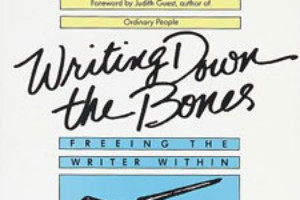
Writing Resources: Natalie Goldberg’s Writing Down the Bones
“I used to think freedom meant doing whatever you want. It means knowing who you are, what you are supposed to be doing on this earth, and then simply doing it.” – Natalie Goldberg, Writing Down the Bones
Ah, words of wisdom.
I was assigned Writing Down the Bones by Natalie Goldberg for a creative writing course in college. We were supposed to read a chapter or two a week, but I had a hard time putting it down and ended up inhaling the entire volume in a couple of days. It’s one of the best writing resources on the market but what’s great about this book is that it’s a blast to read.
Goldberg, who has penned a number of books about writing, including several well-known writing resources, mastered the mechanics of writing in college. It was later that she discovered how to tap into her creativity and write more artfully. Four years after that discovery, she began teaching writing workshops and has since become a widely adored master of the craft.
Priceless Writing Resources
“This is the practice school of writing. Like running, the more you do it, the better you get at it.” – Natalie Goldberg, Writing Down the Bones
Writing Down the Bones is a good place for young or new writers to start. The first chapter discusses pen and paper and how to select appropriate materials, supplies, and other writing resources.
Yet the book is also ideal for seasoned writers who are ready to get serious about the craft. That’s where I was with my own writing when I was first introduced to this book, and it made me realize that writing could be more than just a way to pass the time when I was feeling inspired.
Natalie Goldberg will teach you how to freewrite (she calls this the timed exercise), how to make writing a daily practice, and she’ll give you countless ways to explore your writing on a deeper and more creative level. From setting up your own writing space to finding topics to write about and unlimited sources of inspiration, she crams in enough ideas to keep you busily writing for years to come.
“Natalie’s experience in Zen meditation, which is essentially a subtractive process, has provided her insights.” – Robert Pirsig, author of Zen and the Art of Motorcycle Maintenance
With over seventy chapters, each just a couple of pages long, this text is a quick and easy read. At the same time, it’s packed with ideas, information, inspiration, exercises, and writing tips that will get you writing, and keep you on task.
This is one of my favorite writing books, and the first one that I recommend to anyone who loves to write and everyone who shows the slightest interest in writing.
Have you read Writing Down the Bones? What did you think of it? Are there any other books or writing resources for creative writers that you would recommend?
Writing Resources for Naming Your Characters
Have you ever read one of those epic fantasy novels in which the magical characters can gain total control over any living being (or non-living object) simply by discovering its real and true name? I’ve read about ten of those novels.
What do you think is more perplexing, the fact that authors continue to use this rule of magic (even though it’s tired and ready to be retired) or the astounding number of unique names that writers come up with for all the characters in these stories?
Dubworthy or Dubless?
I have been known to spend hours pondering names and wondering how a writer managed to choose a name that so perfectly fit a character, especially characters that are iconic: Holden Caulfield, Harry Potter, Hamlet, Hanibal Lechter. And they don’t all start with the letter H: Ebenezer Scrooge, Mary Poppins, Sherlock Holmes, Gollum, Cinderella, Willy Wonka, Scarlett O’Hara. The list goes on and on. And it doesn’t stop with literary characters. Remarkable character names can also be found in movies, comic books, and on TV.
Think about the most famous, unforgettable, and compelling characters. They have names that are memorable, names that resonate with the character’s energy: Bond. James Bond. How do you forget a guy like that?
You don’t.
But here’s a better question. How does a writer come up with a name like that?
The Name is the Game
Let me be blunt. I suck at coming up with names. I can’t begin to tell you how many hours I’ve spent pondering great names and trying to come up with handles for my poor, nameless characters. But names elude me. They do. So, what do I do when my fiction writing antics require me to name a character? Well, if I’m already in the throes of writing, I generally write the characters’ names generically and in all caps:
GIRL is walking down the street and freezes when she spots ANIMAL sitting in the middle of the road.
But I can’t avoid naming forever. The story is never finished until everybody is named, and I find that I can’t get very deep into the tale when I’m working with nameless characters. So, I do what any resourceful writer does. I turn to my handy-dandy writing resources.
Enter, Internet
The internet is always my first choice for research. I use an online dictionary and thesaurus. When I need a quick fact, I’ve been known to obtain it from Wikipedia (judiciously, of course) and I also use the open-source, online encyclopedia as a starting place to look for more credible research (they often have excellent annotations). And when I need a name, I’ve engaged the power of Google (a search engine that happens to have a fantastic name of its own).
I’ve googled boy names and girl names, exotic names, and androgynous names. I’ve done it in reverse too, and searched for names by their meaning. I’ve gotten lucky a few times and found just the right name for a character I had in mind. I’ve even found a nifty tool that generates a character name, which is awesome if you can use a name like Magaga Dawntracker.
But looking for a name on the web is like looking for a song in your iPod when you can’t remember the title or artist. It takes forever. And you find yourself endlessly perusing, clicking, and nodding your head (or shaking it, as the case may be). I guess the benefit is that all those names you skim through might spark ideas for other characters, but what about the character you’ve already created? The one whose lack of a name launched you into this quest in the first place?
It’s not like this was a one-time ordeal. Name searching became a major time-suck for me. And fiction writing started to feel more like climbing Mount Everest than a creative experience. I went through this ridiculous cycle more times than I care to recall.
And then one day, I was happily browsing through my favorite bookstore, a local and independent bookstore, and this book popped out at me:
A World of Baby Character Names
Okay, so technically, the title of this book is A World of Baby Names. But I’m not naming any babies. Nope. I’m strictly about naming characters.
Even though this was the first name book that I noticed, I checked out several others before buying this one. It had some features I thought might be useful. Turns out I was right. I’ve used this book a lot. A whole lot.
What I like best about it is that the names are separated by country of origin. And there are tons of names in this book that my American self has never heard before. I can look at the Hindu names and the Polish names, and then I can get creative and start combining them.
The names are also sorted by gender. That makes looking for an androgynous name a little challenging, but on the other hand, there’s a nice index, so I can scroll through every single name in a few minutes — a great method for finding a name that pops out at me. I can then navigate to the name page and find out what it means.
Each section also includes a written introduction about names in various cultures, which is pretty cool.
If you struggle with naming characters the way I do, then you should seriously consider getting this book or one like it.
A Few, Final Tips and Resources for Naming Characters
Readers have made tons of excellent suggestions since this article was first published. Here are their additions to the ever-growing list of resources for naming characters:
- Visit Behind the Name to peruse names and their meanings. You can browse by gender and/or nationality.
- Keep a special notebook (or a page/section in your notebook just for names. Make sure you jot down interesting names whenever you come across them and when you need a name, you’ll have your own stockpile!
- Do you have a smart phone or tablet? Search for “baby naming” or “character naming” apps. Tip: check the ratings and read the reviews to make sure you pick the best apps available.
- Want to choose names based on data and statistics? The U.S. Social Security Administration shows most popular names by year, decade, state, and territory!
A Rose By Any Other Name
How do you come up with character names? Do you have a name book? Is there a website you use? Do you have a knack for names using nothing more than your own brilliant imagination? What are some of your all-time favorite character names? And finally (here’s a question for the most creative souls out there), can you think of any other good uses for a baby name book, other than naming babies and fictional characters?
12 Gifts and Goodies for Writers
All around the world, we have officially entered the holiday season. It’s a time for giving thanks, enjoying the company of loved ones, and gorging on scrumptious feasts. It’s also a time of giving.
While I have mixed feelings about the unbridled consumption that pervades America at this time of year, I also have a deep affinity for the act of giving. It’s not unusual for me to spend hours choosing the perfect gifts for loved ones. In fact, I started my holiday shopping a couple of months ago, so I would have plenty of time to make my selections.
I’m also a firm believer that during this time of year, when we look outward and offer gifts to the most important people in our lives, we should also be generous with ourselves. I always treat myself to something special during the holiday season. This year, I’m giving my office space an overdue makeover. Hopefully, by January, my workspace will be more comfortable, functional, and aesthetically pleasing.
Choosing special gifts for others (and for yourself) should be fun but it’s not always easy. There’s always someone you can’t find the perfect gift for. If that person happens to be a writer, then I have a wonderful list of writerly treasures that you can add to your gift list. And if you’re the writer, you’ll find lots of goodies that you might want to treat yourself to during this holiday season or any other time of the year.
1. Something to read: books
We writers love books. We can’t have too many of them! And with so many books published every day, it’s hard to keep up. Fortunately, the editors at Amazon have put together a list of the best books of 2012 to help you choose the latest and greatest in contemporary fiction.
2. Something to wear: custom jewelry for writers
I found this lovely “I write” charm bracelet at Etsy, where you can peruse handmade and one-of-a-kind gifts for hours. Support artists by buying from them through this delightful online boutique. Tip: use the search field to find writing- and writer-related treasures.
3. Something in which to write: notebooks and journals
Moleskine notebooks have long been favorites among writers. They’re elegant and practical, affordable but high quality, with plenty of designs to choose from. Pair one of these with a pen and you’ve got a nice little gift that any writer will appreciate.
4. Something to inspire: a jar of words
I’m a huge fan of things that are fun or stylish and practical. Any writer would love a jar of words for those times when we need a little inspiration. Writer’s Remedy Magnetic Poetry is the perfect gift for anyone who loves words, reading, or writing.
5. Something to buy: bookstore gift certificates
This might be my personal favorite. With a bookstore gift certificate, we writers can pick up anything we need, from books and magazines to bookmarks, journals, and pens. An Amazon gift card is always a safe bet but nothing beats a gift certificate to a writer’s favorite bookstore.
6. Something to play with: for fun and inspiration
This one’s a triple threat: play it as a game, display it as a decoration, or use it to inspire poetry and other writing ideas. Haikubes are big dice with words instead dots, full of creative possibilities!
7. Something to write with: pens and pencils
Everyone needs something to write with, especially writers. Choose a fancy fountain pen or a big box of disposable ballpoint pens. Either way, it’s an awesome gift, fun and functional, especially when coupled with a nice notebook.
Bonus gift idea: put a bunch of pens and pencils (don’t forget Sharpies and highlighters) in a decorative jar and tie a ribbon around it!
8. Something special: just for writers
CafePress is jam-packed with unique and interesting gifts and goodies. I found this nifty little “I write, therefore I am” tote bag by searching “gifts for writers.” CafePress has something for every writer, and if they don’t have what you want, then you can make something yourself!
9. Something that holds thousands of books
We’ve entered the digital age of reading and there’s no going back. While many bookworms and wordsmiths still rail against electronic reading, it’s important to experience your work the way your readers will. Every writer should have a Kindle or an iPad!
10. Someplace to hang some books
These magical floating bookshelves by Umbra makes it look like your books are floating on the wall. They’re great space savers and a fun way for writers to keep their most important books close at hand (I’d like to install a few around my desk).
11. Something to make writing fun and easy
I absolutely love Scrivener. It’s the best gift I’ve ever bought myself! I can’t sing the praises of this phenomenal piece of writing software often or loudly enough, and I don’t know how anyone can write a book without it.
12. Something to drink from!
You know how we writers are about our coffee, tea, and alcohol. Who among us wouldn’t love a writerly mug from which to sip tasty and stimulating beverages?
Give yourself a goodie!
Some of these gifts make great treats that you can reward yourself with. If you’re a writer, get yourself a little something special every time you finish a chapter or hit some major milestone toward your writing goals. See anything here you’d love to have? Got any great gift ideas to add to this list? Tell us about it in the comments section.
Enjoy the holiday season, and keep writing!
Writing Resources: The Chicago Manual of Style
The Chicago Manual of Style is the most widely-used resource for American English style, grammar, and punctuation. If you’re working on any kind of writing project and need a solid reference that provides answers for how to consistently apply style and grammar, then this is the book for you.
Chicago was originally published in 1906 with just 200 pages under the lengthy, albeit descriptive title: Manual of Style: Being a compilation of the typographical rules in force at the University of Chicago Press, to which are appended specimens of type in use. Yes, that’s a mighty long title.
104 years later, in August, 2010, the sixteenth edition of The Chicago Manual of Style was published with 1,040 pages. It is available in hardcover, and there’s also a handy online edition that you can pay to subscribe to.
The CMS is so widely used because it can be applied to almost any type of writing. It’s extremely flexible and offers writers options for various formats. Many smaller, niche-oriented style guides are based on the concepts outlined in Chicago, making it the foundation for most writing styles and grammar usages found throughout America.
What is a Style Guide?
There is a significant difference between a style guide and a grammar guide. A grammar guide will address the formal rules of language, rules that are applicable across any style, form, or format.
A style guide addresses all the gaps in grammar, and there are many. It also provides a set of guidelines that writers can use to format their work, often with an emphasis on citations. Adhering to these guidelines keeps your writing clear and consistent. If you’ve ever read a document or book that sometimes wrote out numbers (one, two, three) and other times used numerals (1, 2, 3) or used the serial comma in some sentences but not in others, you know how confusing and inconsistent written works can be when writers and editors don’t use a style guide.
Finally, many style guides incorporate the rules of grammar so they address a wider range of questions and writing issues. Chicago is one such style guide. If you’re looking for a general purpose writing resource that you can turn to for style and grammar, you’ve just found the holy grail.
Sixteenth Edition
The latest edition of Chicago provides detailed guidelines for electronic publications, details that the digital world has been anxiously awaiting. Those of us who remember the days before the Internet was the primary means for publishing and communications will appreciate the many questions that arise when writing for electronic publication, questions that went unanswered for many years.
Some of the new electronic recommendations address websites and other online content as well as ebooks. There’s also a revamped appendix that provides guidelines for production and workflow in the electronic environment while the glossary has been expanded to include vocabulary associated with both electronic and print publishing.
More Writing Resources
If you’re not ready for a style and grammar guide that has over 1000 pages, then you might be more comfortable starting out with something slimmer, like Strunk & White’s The Elements of Style (4th Edition). If you’re writing for a particular publication, then you should check with the editor or manager to see if there is an established style guide that you should use. When no other style guide is specified, Chicago is the one to use, especially if you’re writing fiction or creative nonfiction.
For more recommendations, visit my Books page, and keep on writing!
Writing Resources: Wired for Story
Are you a storyteller? Do you want to be? Then I suggest you pick up a copy of Wired for Story, ASAP.
This is easily the best book on writing fiction that I’ve ever had the pleasure to read. The book takes a fresh approach and tackles fiction writing from a scientific perspective. Thus the subtitle: “The writer’s guide to using brain science to hook readers from the very first sentence.”
Before all you left-brained creatives bristle at the word science, know this: the book is completely accessible. It doesn’t confuse you with complex scientific jargon. Instead, it uses simple examples (mostly told as stories) to demonstrate the science behind story.
What keeps the reader’s brain engaged? What causes the reader’s brain to wander off in search of something more compelling? How do you hook readers in the first place? If you want to know the answers to these questions, you need to read this book.
Not only does Wired for Story answer these questions, it explains what are the most critical elements that your story needs in order to resonate with readers. And as an avid reader, I found myself nodding along with every piece of insight and advice this book offers.
We’re All Wired for Story
“Story, as it turns out, was crucial to our evolution.”
- Lisa Cron, Wired for Story
In the past year, I’ve read several books on the craft of fiction writing. I don’t think I finished half of them. Some were unrelatable (like the one that used a bunch of novels I’ve never read or heard of as examples). Others were written in a tone that I found dull (and in one case, offensive).
So when Wired for Story arrived in my mailbox, I was a bit hesitant. But once I got started, the book was hard to put down. Not only did it address issues that most other books on the craft of storytelling miss or gloss over (even though they are of critical importance), I found it fun and entertaining, too.
I found concepts in this book that I could immediately put into practice. I experienced several aha! moments where I thought that’s exactly what my manuscript needs!
“Storytelling trumps beautiful writing every time.”
- Lisa Cron, Wired for Story
My favorite chapters dealt with characters (and more specifically, the protagonist), explaining the importance of creating characters who inspire emotion from the reader, characters who want something (one thing internally and something else externally), and characters who possess the all-important inner issue. I immediately recognized the validity of these concepts and because they were explained so smoothly, I could even see where my own characters were missing the mark.
Perhaps most importantly, Wired for Story will get you out of your own head and force you to think not like a writer, but like a reader. You want people to buy your book, read it, and give it positive reviews. So, you better be cognizant of what their expectations are and what they will experience when they read your story. Why should they care about the protagonist? How will they relate to her goals, struggles, and inner issues? Or will they?
Best of all, I found Wired for Story to be highly motivational. I couldn’t wait to finish each chapter so I could work on my own story and apply the concepts I’d picked up.
Whether you’re thinking about writing a novel, in the middle of drafting a story, or working on revisions for a screenplay, this book will keep your head in the game, because it’s a constant reminder that writing is a delight. It cuts through the fluff and gets to the heart of what makes a story work.
Get Wired for Story
“Writers are, and always have been, among the most powerful
people in the world.” – Lisa Cron, Wired for Story
We’re all wired for story, but are you wired for storytelling? Find out what really hooks readers and what keeps them glued the page, and learn how to write a story that people will read and love. What are you waiting for?
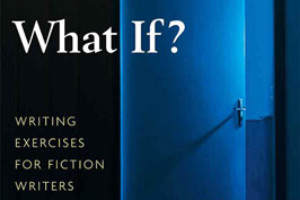
What If? Writing Exercises for Fiction Writers
Good fiction is comprised of many different elements: believable characters, realistic dialogue, and compelling plots. Every decent story has a beginning, middle and end. Intriguing tales are built around conflict and are rich with themes and symbols. And those are just the basics.
It can be pretty overwhelming.
Fiction writing is hard work. It requires a complex and diverse set of skills. Stringing words together into sentences only scratches the surface of what goes into good fiction writing. Fiction that is truly worthwhile is layered with meaning. It’s made up of an infinite number of tiny parts. Most importantly, it has a sense of truth and realism that the real world often lacks.
Mark Twain said, “Truth is stranger than fiction, but it is because fiction is obliged to stick to possibilities; truth isn’t.” Ralph Waldo Emerson said, “Fiction reveals truth that reality obscures.” And Stephen King said that “Fiction is the truth inside the lie.”
In other words, fiction, at its best, feels truer than reality. Great writers make it look easy, but writing that kind of fiction, the kind that’s worth reading, is nothing short of magic.
Writing Exercises for Study, Practice, and Inspiration
It takes years to master the craft of fiction writing, to get so good that you make it look effortless.
Other than reading plenty of fiction, one of the best ways to master this complicated craft is through writing exercises. I have found that the best fiction writing exercises offer three benefits:
1. Tools and Techniques: it’s not enough to be given a writing assignment that does little more than get you to scrawl words on the page. A good writing exercise imparts useful tools and techniques that, once learned, will stay with you forever.
2. Practice: writing exercises force you to do more than study the craft; they also give you practice and experience. They work your writing muscles, which is why they’re called exercises.
3. Inspiration: inspiration often come when we suddenly see the world in a new way. Good writing exercises point you in a new direction and push you toward fresh ideas from broad story concepts to minute details that enrich your narrative.
The book What If? Writing Exercises for Fiction Writers provides fiction writers with all of these benefits and a whole lot more.
What If? Writing Exercises for Fiction Writers
I picked up my copy of What If? as required reading for a fiction writing class that I took in college. Ironically, we didn’t use the book much in class, but I’ve kept it close and often turned to it for insight and inspiration. Since it’s a college textbook, it’s a bit pricey, but it’s worth every penny. Here’s what you get:
- 115 fiction writing exercises: everything you could want, including tools and techniques that strengthen your writing, practice for gaining experience, and inspiration for new projects as well as projects you’re already working on.
- 24 short stories: from the likes of Jamaica Kincaid, Margaret Atwood, Raymond Carver, Alice Munro, and Tobias Wolff, these stories were written by some of the greatest writers in literature and they serve as excellent examples for demonstrating concepts presented throughout the text.
- Selected bibliography: this book could keep you busy for years, but if you want more, the selected bibliography will point you in the right direction. It’s packed with fantastic writing resources.
- Wisdom: many of the exercises include insightful quotes or recommendations for further reading.
- Examples: Almost all of the exercises include student examples, which demonstrate how the exercise can be successfully executed.
When I first got the book, my favorite thing about it was that it got me thinking about fiction writing from new angles. Later, I found that the exercises were good practice for developing my writing and storytelling skills. Even now, when I read through a few exercises, I’m inspired, not just with ideas, but I’m actually inspired to write. I can’t wait to get to work.
Sample it for Yourself
Here are summaries of some of my favorite exercises from What If?:
Image Notebook
Keep an image notebook and write down one image every single day by asking yourself “What’s the most striking thing I heard, saw, smelled, touched, tasted today?”
Put Your Characters to Work
Write a story in which your character’s personal problems are played out at his or her workplace. This exercise is a good reminder that too many stories ignore the mundane in order to focus on the extraordinary.
Go Ahead, Yawn
Give your character a physical problem to cope with. The example given is a nun who has a piece of dental floss stuck between her teeth all day. It’s not the central conflict but constant reminders of her discomfort keep readers engaged at a visceral level.
What If? Writing Exercises for Fiction Writers
What If? is my favorite resource for fiction writing, and I can’t recommend it highly enough. Pick up a copy for yourself.
What are some of your favorite fiction writing resources?
10 Things I Love About the Kindle
Over the past few years, e-readers have changed the way we browse, purchase, and read books. As with any new technology, there is resistance to adopting e-readers. Some people have sworn to never give up their trusty paperback and hardcover books.
People have a lot of reasons for swearing off ebooks, like the simple desire to stick with the familiar. Many traditionalists say they can’t give up the smell of a new book. Others have expressed their need to put their book collections on display or use them as décor.
In what might be considered more practical reasons for avoiding this new technology, plenty of folks have wondered whether the files that comprise ebooks are safe and secure. Digital files are not tangible, so they seem far more fragile than a nice solid object in your hand. Yet I’m sure a similar argument was made many centuries ago when paper replaced stone tablets: Fire and water destroy paper so easily. Nothing can replace a trusty block of concrete!
When I first heard about e-readers, my heart almost stopped. You see, I’m very attached to my books. The idea that we might, one day soon, be living in a world where books were just bits and bytes rubbed me the wrong way. But in time, my attitude changed. A big reason for this has to do with bulk and volume. I simply don’t want to tote around hundreds of pounds of books for the rest of my life. I have a lot of books and the idea of fitting 3,000 of them into a device that fits in my hand was mighty appealing.
But that’s not why I finally bought a Kindle. What finally made me get a Kindle was the fact that I was about to become an author.
Kindle for Writers
In recent months, the number of ebook sales has surpassed print sales. Ebooks, and Amazon in particular, have made books cheaper and more accessible for readers. More importantly, they have made publishing more accessible to writers. My recently published book, 101 Creative Writing Exercises, has already sold twice as many copies for the Kindle as it has in print.
I’m glad I bought a Kindle when I did.
In fact, the reason I finally caved and got the Kindle was because I was writing a book. Based on my market research, I knew the majority of my readers would be using the Kindle, and I wanted to be able to review my own product and test it for quality in the same format my readers would be using.
Writers should keep in mind that a Kindle purchase is a tax write-off if you’re writing professionally or with the intention of getting published. And the benefits of the Kindle don’t stop there.
10 Things I Love About the Kindle
- It holds approximately 3,000 books. I can take my entire library with me everywhere I go (no more agonizing over which book I want to bring on vacation), and it saves tons of space in my home.
- Most ebooks are cheaper than their paperback counterparts. While some publishers keep their ebook prices high, the prices are likely to go down as ebooks compete in an increasingly affordable market.
- Authors who self-publish are reporting much higher royalty earnings thanks to ebooks. I like knowing that an author gets a greater share of the revenue when I purchase their self-published books on my Kindle.
- When I want to read a book, I can buy it and be reading it in seconds.
- My wrists don’t get sore from holding up massive 1200-page books. It’s easy to curl up comfortably with with my Kindle. I have spent many a night wrestling into a comfortable position with an enormous book, so this is a huge bonus for me.
- Instead of writing notes in the margins or keeping a separate notebook, I can attach notes digitally to the book I’m reading.
- I can also create bookmarks with a couple of clicks, making it easy to return to passages I want to revisit later.
- I can pop into the Kindle store from the device and browse, shop, buy, or add items to my wish list. This is a great feature when you’re reading books on the craft of writing that mention other titles.
- Kindle remembers where I left off, so I don’t have to use bookmarks or dog-ear my books to save my place.
- I can look at the book I authored on my Kindle and see what the majority of my readers see when they read it.
Finally, I want to add that if your Kindle is destroyed, stolen, or lost, you can get a new one and easily restock it with all of your ebooks at no additional charge — because your purchases are stored electronically and can be downloaded to multiple devices.
There’s a lot to love to love about the Kindle. Mine is the third generation Kindle Keyboard, and I’m sure the newer models that came out last fall are even better. I can’t wait to upgrade to the Kindle Touch.
Do you have a Kindle or use an e-reader? Do you want one? Do you feel that as a writer, you should be able to review your books on devices that your readers will use? Share your thoughts about ebooks and e-readers and how they affect authors by leaving a comment.