Journal writing tools and resources.
This post contains affiliate links that earn commissions.
We usually understand a journal to be a place for writing about ourselves, but journals can be used for plenty of other purposes, many of which are useful to writers.
I’ve had my share of adventures in journal writing. As a teen, I kept a diary. Later, I had a poetry journal. I tried dream journaling, art journaling, and sometimes I keep a gratitude journal.
I believe journal writing is a huge boon to writers, especially when we’re not working on a specific project or when we’re looking for our next big project.
Today, I’d like to share a few of my favorite journal writing tools and resources.
A Place to Create
It’s been said a million times: If you want to be a writer, you have to write. I would add that if you want to be creative, you have to create. Sitting around and waiting for a big, blockbuster idea won’t do you any good. You’ve got to practice. And keeping a journal is a great way to practice writing and foster creativity every single day.
What I love best about my journal is that there are no rules. It’s my own creative space. I use it for freewriting, sketching, and writing down my thoughts. I don’t write in my journal every day, but before I started blogging and writing professionally, I was pretty diligent about using my journal for routine writing practice.
I’ve been poking around the web in search of some of the best tools and resources for journaling with an emphasis on creativity and writing. Here’s what I found:
Moleskine Journals
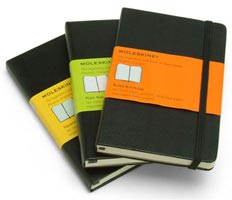
Moleskines are one of the most popular notebook brands for writers and artists, and they are my personal favorite. They come in various sizes ranging from pocket-sized to 8 x 10 (inches) and with various paper, including blank, ruled, dotted, and grid. They even have an art collection with thicker paper. Each notebook features a pocket in the back, a placeholder ribbon, and a strap that keeps the journal closed. When opened, this notebook lies flat, which is ideal for a comfortable writing experience. Moleskines were popular with Vincent van Gogh, Pablo Picasso, and Ernest Hemingway, so they’ve got solid endorsements.
The Artist’s Way
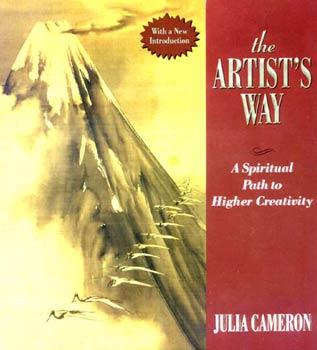
This classic book for writers and artists is well known for giving us “morning pages.” It has inspired writers and artists to create on a daily basis. The Artist’s Way has become a staple among all kinds of creatives from filmmakers to crafters. You’re sure to find something to help you establish a writing routine, improve your writing skills, or overcome writer’s block in this book, which includes a twelve-week program packed with activities and exercises that you can do.
Pilot G2 Pens
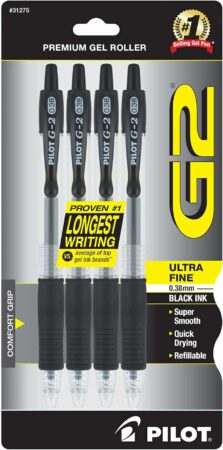
I have tried many pens over the years, and while I steer away from fancy and expensive pens, I can be picky about what I write with. My current favorite is the Pilot G2 (black, ultra fine). It’s got a comfortable grip, smooth flow, rich color, and fine stroke, ideal for smaller lettering. For a similar pen with a heavier weight and thicker stroke, I love this pen’s cousin, the Pilot G2 Pro.
Wreck This Journal
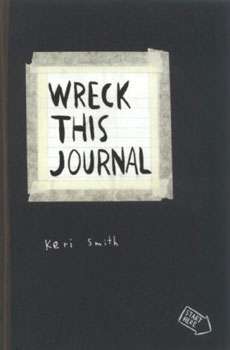
Wreck This Journal unleashes your inner artist and allows you to be creative without fear of failure because the journal is designed to be wrecked. It’s a great way to get your creativity out of the box. As you work your way through the journal, you’ll cut, tear, and thrash the book. You start letting go of constraints and inhibitions, allowing yourself to make mistakes and create poorly crafted prose, giving your creativity the courage it needs to take risks.
A Few More Goodies
- I love this: 1000 Journals traveled from hand to hand throughout the world.
- Did you know that journal making is a popular hobby, and YouTube is jam-packed with how-to videos. If you love stationery, notebooks, creativity, and books, this might be the hobby for you, especially if you can’t find the perfect notebook for your needs (just make your own!).
- Before Moleskine, this was my favorite journal: The Watson-Guptill Sketchbook.
People use journals for a variety of purposes: for self-improvement, personal reflection, heritage preservation, creativity, tracking professional progress, and writing practice. Do you keep a journal or use a notebook? How has journal writing helped you? Got any journaling tips or resources to add to this list? Leave a comment, and keep journaling!

You always have wonderful informative posts. Just wanted to say thanks for sharing all the great links. 😉
Thanks so much, Tiffiny.
Hi Melissa. I would like to let your readers know about writingthroughlife.com , and especially about my weekly journaling prompts.
Amber, thanks for adding your site to this list! I’d like to have all the best journaling sites listed here.
Melissa, thanks for this great post! This is fantastic advice, and I love all these journaling resources! I’m definitely taking some time to poke my way through them 🙂
A year or two ago I heard the little tip that keeping a writing journal, aside from a personal journal, could be a huge help. I started to try it out, writing down random thoughts, descriptions, or anecdotes from my novel. I couldn’t believe some of the gold that came out of that! Some of those ten minute sessions turned into short stories or novel scenes. Journal writing is a great habit for writers!
Hi Jessica. That’s great! I’m so glad you’re enjoying all these links and resources. I have a main journal for freewriting, poetry, and reflections. But I also have a fiction notebook/journal. It’s been a wonderful creative space for me.
I’d like to recommend a Windows-based software app: Life Journal For Writers. I have used it for many years. It can be purchased either by mail or downloaded. I still use Version 2.X, but I believe they are up to Version 3.X.
Thanks for adding your recommendation!
Hi Melissa,
Good post.
I’ve been journaling for about 10 years. I write and also do watercolors and acrylics. I started out keeping sketchbooks, and over the years that evolved into a combo of sketchbook, journal, scrapbook, with a little mixed media artbook moves thrown in recently.
Really lovely, though not cheap, hand made and sewnibinding that lays flat leather journals can be had from http://www.renaissance-art.com. The paper is Arches Text Wove (not called Velin Arches) is wonderful for most media (not oils) for those who like to include artwork with their writing. The paper dates from the French Revolution. I’m filling my 16th now. Caveat: the paper has a texture, which means if you write in it with a foundain pen, I recommend at least a medium nib, broad is even better. But it takes gel or ballpoin or pencil fine.
Also, this program “The Journal” is worth checking out. You can include photos, video clips, etc. You can get writing prompts and other nifty helps. I use it for logging activities and including photos the easy way and also recording email c onversations that are important to me. Web site:
http://www.davidrm.com/thejournal/
Regards…
Hi Bill. I recently started drawing (again) and am looking at options for a color medium. I like oil pastels but they aren’t good for fine detail. I’m thinking about getting some watercolor paints and/or pencils. I actually prefer brighter, bold colors (like oil pastels) but watercolors seem like a better fit for me. It’s either those or ink pens. For now, I’m sketching in a Moleskine with graphite pencils and occasionally, colored pencils. I’m a bit chagrined at how expensive quality art supplies are. Quite an investment to get professional quality paints, brushes, and paper!
“The Journal” looks good, but I’m a Mac user and it appears to be available only for Windows. I should have included Evernote in this post. One of the things I love about Evernote is that it works and syncs across all platforms. I can write something on my computer and access it later on my iPhone. That’s great for mobility.
Thanks for this helpful post, Melissa. 🙂 — Suzanne
I use Evernote for all my research notes and the memo app on my phone for random thoughts. I would use a journal, but Lord help me I cannot read my own hand writing after a hasty scrawl! I am trying to do better haha.
My handwriting has become atrocious, so I can relate. I don’t know if I’m scrawling things down too fast or if I haven’t been writing by hand enough to maintain my penmanship, but I’m trying to slow down and get my handwriting to be more legible!
I celebrate the anniversary of my completion of The Artist’s Way course every year since I discovered the book in an art supply store in Santa Fe in 1994 so 20 years this March. This book can change the trajectory of your life. Thanks for mentioning it to your readers.
Indeed, The Artist’s Way has helped many writers and artists. Thanks!
Oh, the journaling adventures! From diary drama to poetry ponderings, dreamy doodles to gratitude galore, it’s a wild ride in the world of journal writing. And Melissa, you’ve unlocked the treasure trove of journaling tools and resources! With your arsenal of creativity, there are no rules, just boundless possibilities! Cheers to unleashing our inner Hemingway or Picasso, one journal page at a time.
Thanks, Sally. I agree, journaling opens many adventures!